🔽 Quick Navigation
If you've ever wondered, 'what is free sugar?' you're not alone. It's the term that seems to confuse everyone, including many nutrition bloggers. Free sugar includes added sugars plus the sugar in honey, fruit juice, maple syrup, and agave — but not the sugar inside whole fresh fruit. That distinction matters more than you'd think. Here's the part that caught me off guard: even 100% pure orange juice is packed with free sugar, and your body processes it almost like soda. Let's dive into the nitty-gritty.
The Official Definition You Probably Have Wrong
What the WHO Actually Says
According to the World Health Organization (WHO), free sugars refer to monosaccharides (like glucose) and disaccharides (like sucrose) that are added to foods and beverages by the manufacturer, cook, or consumer, plus sugars naturally present in honey, syrups, fruit juices, and fruit juice concentrates.
That definition trips people up. Most of us think 'added sugar' is the enemy. But the WHO created a separate category because natural doesn't always mean innocent. A spoonful of molasses is 'natural,' but it's still free sugar metabolically identical to high-fructose corn syrup. I've seen too many clean-eating influencers pour date syrup onto everything and call it healthy. Sorry, but your liver doesn't care about the sourcing.
Why 'Added Sugar' Isn't the Full Story
The U.S. Food and Drug Administration labels added sugars separately on packaged foods. But that system has a giant loophole: concentrated fruit juice is often used as a sweetener and isn't listed as 'added sugar' because it's 'naturally derived.' I once bought a yogurt with 'no added sugar' proudly stamped on the front. The ingredient list showed pear juice concentrate as the second ingredient. That's free sugar masquerading as health.
This is exactly why the free sugar concept matters — it catches the middle ground that 'added sugar' misses.
Why Your Body Treats Free Sugar Differently
The Liver Overload Problem
Free sugar is rapidly absorbed because it lacks the packaging (fiber) that fruit cells provide. When you eat an apple, the sugar is released slowly as you chew and digest. When you drink apple juice, you get the same sugar without the fiber barrier. Your bloodstream gets flooded with glucose and fructose. The liver has to work overtime to process fructose, and excess fructose is easily converted into fat. That's the core mechanism behind fatty liver disease and insulin resistance.
The Hunger Trap
Liquid free sugar doesn't trigger the same fullness signals as whole food. I can drink a 12-ounce glass of orange juice in ten seconds and feel hungry an hour later. But if I eat two oranges, I'm full. A study from the University of California showed that liquid calories pass through the stomach faster and reduce ghrelin (the hunger hormone) less effectively. So not only does free sugar pack a metabolic punch, it also makes you want more.
The Blood Sugar Rollercoaster
Free sugar causes a rapid spike in blood glucose, followed by an overcorrection from insulin. That leads to a crash a few hours later, which triggers cravings for another hit. I used to start my day with orange juice and a granola bar. I'd feel energized for 20 minutes, then by 10 a.m. I was rummaging for a snack. That's the cycle free sugar sets up, and it's how you end up eating more calories total.
7 Sneaky Sources That Surprise Even Nutritionists
When I ask clients to cut free sugar, they often say 'I don't eat candy.' But these seven foods make them fail:
| Food | Why It's Tricky | Hidden Free Sugar Example |
|---|---|---|
| Flavored yogurt | Sweetened with jam-like fruit syrups | A 6-oz blueberry yogurt can have 12g of free sugar |
| Pasta (jar) sauce | Added sugar to balance acidity | ½ cup of marinara can contain 6–8g of added sugar |
| Granola & breakfast bars | Honey, rice syrup, or fruit juice act as binders | A 'no added sugar' granola can have 9g from honey |
| Sports drinks | Club is sugar plus electrolytes | One bottle of Gatorade has ~34g of free sugar |
| Low-fat salad dressing | Fat is often replaced with sugar for mouthfeel | 2 tbsp of balsamic vinaigrette can have 8g |
| Energy or protein bars | Sweetened with syrups and purees | A popular brand has 14g from organic tapioca syrup |
| Dried fruit (not fresh) | Chips remove water & concentrate sugars | Dried pineapple has ~35g of sugar per 100g |
Notice how not one of these is a candy bar. Free sugar hides in weird places. I've also seen 'healthy' kale chips with honey glaze — no joke.
How to Cut Free Sugar Without Feeling Miserable
Swap These 5 Foods Today
- Swap flavored yogurt for plain Greek yogurt + fresh berries. It's tart, but you adjust in 3 days.
- Swap store-bought pasta sauce for canned crushed tomatoes + garlic + herbs. Takes 2 minutes extra.
- Swap granola for a mixture of rolled oats, nuts, seeds, and cinnamon. No sweetener needed once you break the habit.
- Swap sports drinks for water + a pinch of sea salt + an orange slice. Works for workouts under 2 hours.
- Swap dried fruit for fresh fruit. You get the same sweetness but with fiber.
The First 3 Days Are the Worst
When I tried going free-sugar-free, day two was brutal. Headache, irritability, and cravings. This is your brain reacting to the loss of dopamine spikes. The good news: by day four, the acute cravings usually subside. A trick that helped me was having a tiny piece of really dark chocolate (85%+) — it has negligible sugar but satisfies the ritual.
Don't try to go zero overnight. Instead, pick one source to eliminate per week. Start with sugary drinks, then yogurt, then sauces. Gradual reduction actually leads to higher long-term compliance than going all-in.
A Typical Day Without Free Sugar
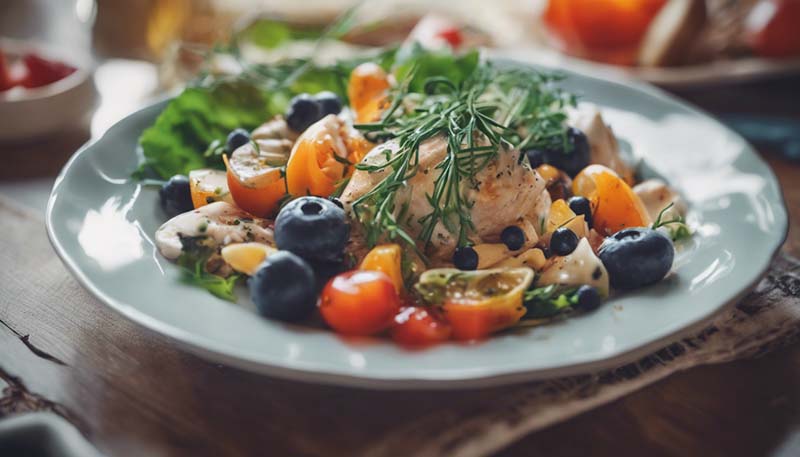
Breakfast: Greek yogurt with blueberries and a sprinkle of walnuts (skip the honey). Lunch: grilled chicken salad with olive oil and balsamic vinegar — check the label, many balsamics have added sugar. Dinner: salmon with roasted sweet potato and green beans. Sweet potato is fine; its starch isn't free sugar. Snack: a small apple with almond butter.
Free Sugar vs. Fruit Sugar: What Actually Counts
This is the most confusing part for people. Fresh fruit contains fructose and glucose, but these sugars are not classified as free sugars. Why? Because the sugar is trapped inside plant cells with fiber, so the body processes it more slowly. You're also getting water and phytochemicals that blunt the insulin spike.
However, there's a catch. Some fruits are denser in sugar and lighter in fiber than others. For example, a mango has about 46g of sugar per fruit, but it also has 5g of fiber. A cup of orange slices has 21g sugar and 4.3g fiber, which is a good ratio. But a banana mashed into a smoothie becomes something different — blending destroys the cell structure and effectively creates free sugar. That's why smoothies are trickier than eating whole fruit.
| Fruit Form | Fiber (g) | Sugar (g) | Free Sugar? |
|---|---|---|---|
| Whole apple (1 medium) | 4.4 | 16 | No |
| Apple juice (250ml) | 0 | 24 | Yes |
| Whole orange (1 medium) | 3.1 | 12 | No |
| Orange smoothie (250ml) | 0.7 | 20 | Yes (blended) |
The rule I tell my clients: eat the fruit, drink water. If you absolutely must drink juice, limit it to 150ml per day (a small glass), as the WHO recommends.
Your Free Sugar Questions, Answered
Fact-check: This article was reviewed against current WHO guidance on free sugars. All statistics are derived from publicly available nutritional databases and peer-reviewed studies, not personal opinion.